Visionary Breakthroughs: The New Era of Computer Vision Advancements
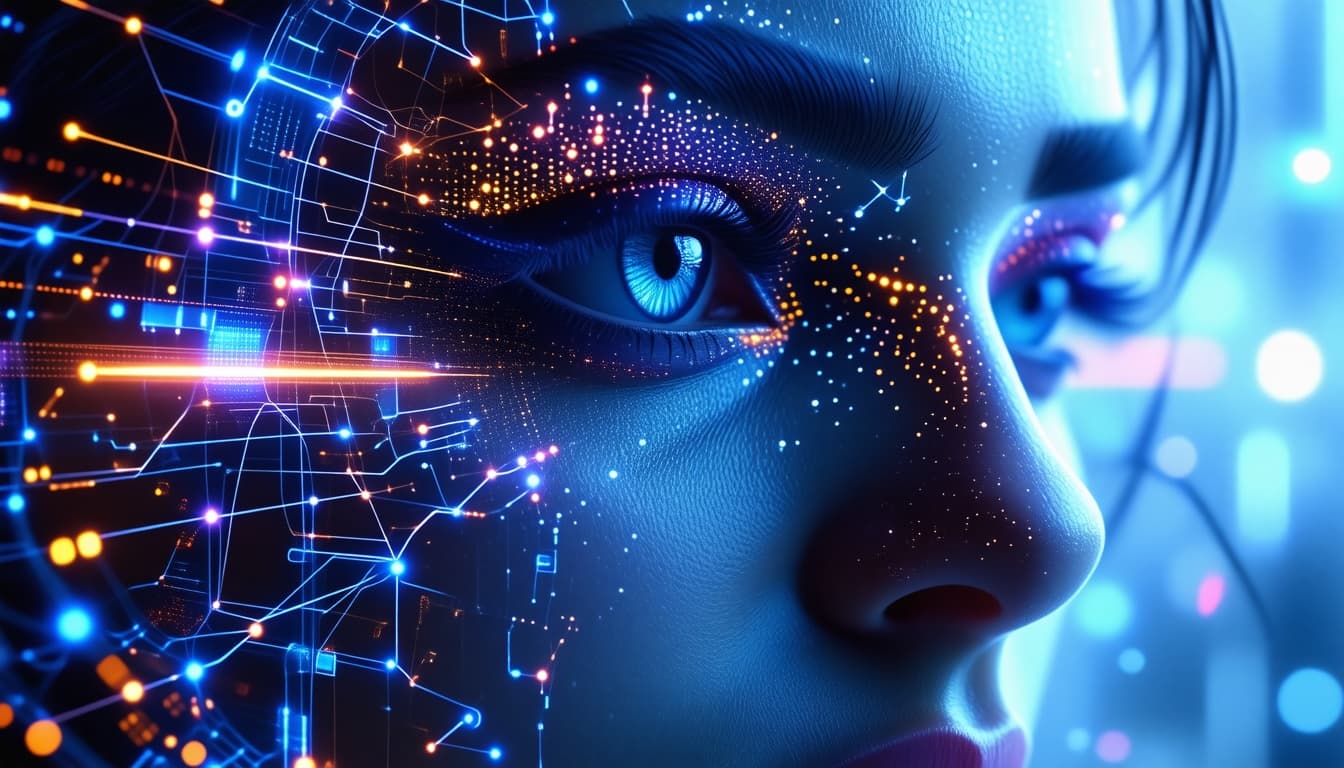
The field of computer vision is advancing at an unprecedented pace, driven by innovative research and practical applications that are reshaping industries. Recent breakthroughs in AI technology have shown promising results, particularly in enhancing our understanding of images and text, revolutionizing manufacturing processes, and pushing the boundaries of digital content creation. Here’s a closer look at some of the most impactful developments reported recently.
Enhancing Text and Image Understanding
Researchers at the University of California, San Diego, have introduced a groundbreaking training method that significantly boosts AI's capability to interpret complex problems that intertwine text and visuals. This method focuses on enhancing AI systems' reasoning abilities, particularly in tackling math word problems that involve visual elements such as charts and diagrams.
In traditional AI training, the quality and diversity of training data often limit performance. However, this new approach emphasizes rigorous evaluation of reasoning processes, potentially leading to more dependable applications in sectors like education and business analysis. The implications are vast: students could receive more effective tutoring, while businesses could harness AI for data-driven decision-making with improved accuracy.
Microscopic Insights: Transforming Manufacturing with AI
A comprehensive review published in Engineering has spotlighted a transformative method called particle vision analysis (PVA). This innovative integration of AI and microscopic imaging seeks to enhance various manufacturing processes, from nanotechnology to pharmaceuticals.
PVA employs sophisticated techniques for classification, detection, segmentation, and tracking, alongside super-resolution imaging. By enabling manufacturers to observe and analyze materials at a microscopic level, PVA can dramatically improve product quality control and accelerate research and development. For instance, in biomanufacturing, precise particle analysis can lead to better understanding of biological processes, which is crucial for developing new drugs and therapies. This leap in capability not only advances manufacturing efficiency but also promotes sustainability in production practices.
New Horizons in Image and Video Synthesis
The recent Computer Vision and Pattern Recognition (CVPR) 2025 conference showcased exceptional advancements in AI-driven image and video synthesis. Key innovations included diffusion models, 3D reconstruction, and neural rendering technologies. These developments are set to redefine applications in various fields, including virtual reality, autonomous vehicles, and digital content creation.
For example, neural rendering techniques allow for the creation of highly realistic environments that can be used in gaming and training simulations for autonomous vehicles. As these technologies mature, we can expect more immersive virtual experiences that blur the lines between reality and computer-generated imagery. This not only enhances entertainment but also holds potential in educational and professional training environments where realism is vital.
Broad Implications Across Industries
The rapid progress in computer vision not only signifies technological advancements but also heralds significant implications for multiple industries. In education, improved AI understanding can lead to personalized learning experiences. In manufacturing, enhanced particle analysis supports quality assurance and sustainability. In digital media, cutting-edge synthesis techniques can foster creativity and efficiency in content production.
As these advancements continue to emerge, they will likely pave the way for new applications and innovations that we cannot yet fully envision. The integration of AI in computer vision is not just a technical evolution but a catalyst for transforming how we interact with technology and the world around us.
Conclusion
The advancements in computer vision are a testament to the potential of AI in solving complex real-world challenges. With each breakthrough, we move closer to a future where technology enhances our understanding and capabilities across various sectors. As researchers and engineers continue to innovate, the possibilities seem endless, promising a future filled with intelligent systems that complement and enrich our lives. The journey of computer vision is just beginning, and its implications are poised to redefine our landscape in profound ways.
Enjoyed this article?
More AI-generated content is published daily.